Showing posts with label i write all right. Show all posts

Monday, December 19, 2022

Humanities


Contributed to the #artvsartist challenge with closeups of some of my quick sketches! View my drawings (and more) in full here and here. Lensa who? AI what? All you need is a pencil and paper, baby.

The #artvsartist challenge, with a 3x3 grid of square images; the middle square is of the artist, and the rest of the squares are examples of the artist's art.

I’m pleased to announce that I’ve been selected to exhibit my drawing Tree Hugger, which I made when I was in high school, in Light Space & Time Online Art Gallery’s 12th Annual Nature Art Exhibition! View the show here. Thank you, LST!

Artist opportunity: Chicago DCASE’s 2023 Individual Artists Program Grant application is now open! The deadline is January 10, 2023, 5pm. I’m a past recipient. Both times I applied, I was selected to receive the grant!: The first was for my interactive public art and mapping project, Dreams of a City*; the second was when I conceived of SLAYSIAN**. More details for IAP here.

A graphic by the City of Chicago's Department of Cultural Affairs and Special Events that depicts a blue speech bubble with the text "Are you an artist in need of funding?"

*(Recent interviews about that passion project / labor of love!: WGN Morning News (video, recorded live), WBEZ (audio, recorded live), Chicago Reader (article).)

**(Which finally happened in person last year! You can continue to enjoy the original virtual version from 2020 here and read about SLAYSIAN in press coverage (including feature articles, reviews, and interviews with the artists and myself) from 2020 here.)

Can you believe this was a decade ago?: Throwback to December 2012 when I went to Miami for the first time and then wrote my now-classic blog post “Notes from [an] underground [art scene advocate / Miami Art Week virgin].” The middle paragraph of image 3 might be one of the funniest things I’ve written. Also, check out the tags I wrote (bottom of image 4). And the 5th image is the kind of comment I love receiving, and what makes it all worth it.

Screenshot 1 of the classic 2012 blog post about Miami Art WeekScreenshot 2 of the classic 2012 blog post about Miami Art Week

Screenshot 3 of the classic 2012 blog post about Miami Art WeekScreenshot 4 of the classic 2012 blog post about Miami Art Week

A 5th screenshot, showing the last comment in the classic 2012 blog post about Miami Art Week

And speaking of older blog posts: Congratulations on winning the World Cup, Argentina! The last place my parents and I traveled to before the pandemic (remember when I lived up to the “globetrotting polyglot” descriptor in my bio?), and I miss it. I waxed wistful about it in the post “Alegría”; read about people, love, life, and getting stranded.

A 4x4 grid of photographs from Argentina (Patagonia and Buenos Aires), late December 2019-early January 2020.

Happy and healthy holidays, everyone! Consider making a year-end gift to Artists on the Lam here. As always, I am so grateful for all of you.

Wednesday, July 1, 2015

11 Chicago art gallery exhibitions to check out in July


Here’s my Time Out Chicago post of art shows to see this month.

Other Chicago stuff:

  • The Chicago Artists Group Portrait (mentioned in the previous post) was incredible. (I sat behind two dogs. Perfection.) Thanks to Jason Lazarus for masterminding it—look out for his official image around August 1!—and thanks to The Chicago Reader for featuring my snapshot from that day in Best of Chicago 2015. (Flashback to the last year The Reader had a “Best Local Visual Arts Blog” category and guess who won, thanks to the best global blog following?)

And personal stuff:


Happy July!

Tuesday, January 20, 2015

Time and Space


Hope you’re having a wonderful 2015 so far! (For the best of last year, check out the previous post.)

I’ve been invited to blog for Time Out Chicago. Thanks for the opportunity, TOC!

I’ve also started a series called Scribble Sunday; every Sunday I’ll post a doodle / drawing of mine—old or new—on Instagram. Follow along!

Thursday, November 6, 2014

Passion, Pt. II


An announcement tied to the previous post:

This winter, I’m going to start creating my own children’s books. It’ll be a return to my roots; as detailed in the essay here, I used to write and illustrate stories all the time as a kid. (For me, this is the ultimate Throwback Thursday!) I have a ton of ideas already, and many of them will be based on my own life and the lives of my friends; you don’t often see a whole lot of people who look like us and do the things we do represented in children’s books. At least, I didn’t. So get excited! And if you know a thing or two about publishing picture books, let me know!

(And on a somewhat related note: Who else is completely against Pixar making Toy Story 4? Those movies were perfect as a trilogy.)

Passion


Last night I published my first piece on Medium, “How to write your way into the Ivy League: Tips for crafting a winning college essay, featuring an example that worked.” Although it’s framed by writing advice, the essay itself underlines my lifelong love affair with art and explains one of the most asked-about lines in my bio, so I’ll cross-post the article below, after the jump:

Columbia University.

Monday, July 21, 2014

Goosebumps


Thursday night. Thank you, thank you, thank you. To the other panelists of “Writing in the Margins”—Sophia Nahli Allison, Olivia Cole, Felicia Holman, and Diana Pando—for being so inspiring. To Tempestt Hazel, Jennifer Patiño Cervantes, and Reuben Westmaas of Sixty Inches From Center for organizing it all. To everyone who came and sat in the audience and took notes throughout the discussion and had brilliant things to say themselves. Also hey thanks childhood hero R.L. Stine for replying to me on Twitter after I told you I name-dropped you during the panel I can die happy and haunt a house now.


Monday, July 14, 2014

Get Your Kicks


Sixty Inches From Center’s “Dialogue: Writing in the Margins” event is this Thursday, 6-8pm. Come! It’ll be my first time on a panel and I’d love to see your beautiful faces in the audience.

Illinois residents: The Museum of Contemporary Art Chicago is free every Tuesday! Spend a summer evening on their terrace with some live jazz.

Obligatory MCA spiral staircase shot.
  
And congrats to Germany for winning the World Cup! Fact: Exactly 10 years ago, I was living in Germany. (In high school, thanks to an übernerd program I was in, I got to be a part of a foreign exchange, spending 3 weeks in Hamburg and 1 week frolicking all over the south.)

Atop the Zugspitze, Germany's highest mountain,
summer 2004.

Verrückt.

Thursday, July 3, 2014

Writing in the Margins


Image via Sixty Inches From Center.

I’ve been invited to speak on a panel about building platforms for artists who are traditionally marginalized, happening July 17. Thanks, Sixty Inches From Center!

Happy 4th, ‘murricans!

Wednesday, September 18, 2013

EXPO CHICAGO 2013 // An Interview with Tony Karman


Expo Chicago 2012 Vernissage.
(Image courtesy of Carol Fox and Associates Public Relations.)

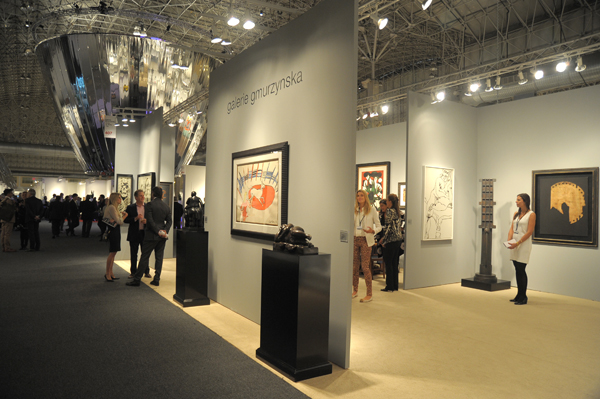
Art lovers, clear your schedules. This week, Expo Chicago, the International Exposition of Contemporary and Modern Art, is back for its second year. Art from 125 premier galleries will grace Navy Pier’s Festival Hall, transformed once again by Jeanne Gang and Studio Gang Architects into an engaging interior environment. Also returning to Expo are EXPOSURE, a platform for emerging galleries; IN/SITU, a showcase of large-scale installations and performative works; the culmination of  /Dialogues, a roster of discussion panels featuring leaders in the art field; and a VIP Program.

New this year are Expo Video, a section for cutting-edge film and new media, and Expo Art Week, an ambitious, city-wide celebration of Chicago’s rich cultural landscape. Highlights of Expo Art Week include museum exhibitions and gallery openings; public art projects; music, theater, and dance performances; special dining experiences, and more. Shuttles will be available to take visitors from Navy Pier to the Museum of Contemporary Art Chicago, the Art Institute of Chicago, and the River North and West Loop gallery districts.

As if that weren’t enough to sate your art and culture appetites, there will also be two new satellite fairs: the inaugural EDITION Chicago at Chicago Artists Coalition in the West Loop; and the Chicago debut of the alternative-minded Fountain Art Fair at Mana Contemporary in Pilsen.

What sophomore slump?

I sat down and chatted with Expo’s President and Director, Tony Karman, for a preview. (He also shared his opinion on the rise of the mega-fair, gave [actually good] career advice to young artists and arts professionals, and talked about his favorite things to do in his [rare] spare time, which may or may not involve having a beer at the Hideout.) Continue reading below.


Wednesday, May 15, 2013

O’Hare, so hot right now


I’m flying out to Hong Kong in less than an hour!

While I spend the next myriad hours in transit, you can:

In the Un-valley by Jackie Furtado.
(Image courtesy of The Prospective Series.)

·         See some art: I was asked to write a piece for the latest catalog of The Prospective Series, a new organization that cultivates the relationship between emerging artists and young collectors. Chicagoans, pick up a copy at their pop-up art show tomorrow! (I went to their first—and most recent—show and it was great. It was also in a speakeasy. So. Cool.) If, like me, you can’t make it or aren’t in Chicago, you can view the catalog online here.

·         Get free art supplies: Chicago artists and arts educators, visit the Chicago Center for Green Technology tomorrow and Saturday for materials from ZeroLandfill.

·         Get annoyed: Specifically, at Mashable’s ludicrous “If You Use the Web, You Are a Curator” article. I have, as you can imagine, strong feelings about this. (And this isn’t the first time I’ve railed against the co-opting of the word “curator.”As you can see from the more recent Facebook thread, I’ve answered some questions for a piece Sixty Inches From Center will publish sometime. When that happens, I’ll make an accompanying discussion post here. (Let’s hear it for discussion posts!)

·         Be amused: A 1,100-year-old paint pigment, believed to be the oldest of its kind, has been found in a 10th century artist’s studio in China and will go on display. This is exciting news, of course, but mostly I’d like to direct everyone’s attention to the comment section of the linked Telegraph article. Trolling in the deep.

Thanks so much to the artblog for the shout out!

And don’t forget: For daily updates (including photos!), follow along on Twitter (where I passed the 500 follower mark last week—welcome, new followers, and thank you, everyone!) and Facebook. See you soon!

Wednesday, March 20, 2013

East Middle West // An Interview with ICY and SOT


Tabriz, Iran, 2012. (Image courtesy of ICY and SOT.)

When they’re not crashing at a Brooklyn warehouse among a collective of creatives they’re tearing across America in a van and trailer with a punk band (why don’t more visual artists do this?). Street art duo ICY and SOT, two young brothers from Iran, have been taking the underground art world by storm. In an onslaught of paint and paste and that old time punk rock and roll, these stencil artists have been touring the country with New York-via-Tehran band The Yellow Dogs, spreading art at every stop.

I met the brothers several months ago when they visited Chicago for the first time, and I corresponded with them when they hit the road again for their “East Middle West” tour. As a preview of their upcoming show at Co-Prosperity, below is our conversation about art, politics, their skate culture roots, life on the road, and more.

ICY and SOT’s exhibition at Co-Prosperity opens this Friday, March 22.

Istanbul, Turkey, 2012. (Image courtesy of ICY and SOT.)

Jenny Lam: How did the two of you first become interested in street art?

Friday, January 11, 2013

Looking ahead / back / good


Happy [belated?] New Year! 2012 will be hard to surpass (see the previous post for the year’s highlights), but I have confidence in 2013 (and, based on this alone, ‘13 has already far exceeded its predecessor / leave it to me to get wound up over Twitter / but seriously Mykki Blanco really was flawless / seriously).

More of 2012’s best: My piece on Arow Collective made it to Sixty Inches From Center’s top 10 most read articles list. Check it.

Photo by Justin Barbin, 2012.


But, as great as 2012 was, we’re (yes I’m guilty of using the royal “we” and what) hitting the ground running in 2013 and have much to look forward to: Thank you so much to the current Dreams of a City assistants. Most of whom are folks I’d never met before, eager to help with a project they’d just heard about. Chicago’s art community is truly a community, and I’m ever grateful for that. If you, too, are interested in helping out, drop me a line.

And the first art event of 2013: Exquisite Corpse performance artist and I CAN DO THAT storyteller Caitlin Bergh’s first one-woman comedy show is this Sunday, and I’m helping curate the show’s accompanying art exhibit. It’s one of Chicago Magazine’s top 5 things to do this week. Go go go!

Wednesday, October 17, 2012

EXPO CHICAGO // An Interview with Tony Karman, Part II

Vernissage, Expo Chicago. Image courtesy of Carol Fox and Associates Public Relations, 2012.

Last month, about a week before Expo Chicago: The International Exposition of Modern/Contemporary Art & Design opened, I sat down with Tony Karman, Expo’s President and Director, for a preview of the inaugural fair. It might have been easy for some to dismiss those early superlatives as simply hype, but once the exposition launched and Festival Hall opened its doors, it became clear that the praise was warranted.

The cavernous setting at Navy Pier; the innovative interior environment designed by Studio Gang Architects, under the leadership of MacArthur Fellow Jeanne Gang; the presentation of leading international galleries; and the wide-ranging roster of special programming all contributed to a most impressive undertaking.

But just how did the fair… fare? A week after its conclusion, I caught up with Karman to find out.

This is a post-fair follow-up to “Expo Chicago // An Interview with Tony Karman.”

Expo Chicago. Image courtesy of Carol Fox and Associates Public Relations, 2012.

Jenny Lam: Expo Chicago was quite an accomplishment. The Vernissage was stunning.

Tony Karman: Yeah, I think we’re very proud that the vision was realized in a way that reflected our intent and reflected what we had hoped for. The vessel has to present the work in a way that’s respectful, and I think we did. It was a transformative space, and the fair was presented in a way that any major international fair should be. So for that I think we’re very proud of the first year.

JL: So you would say it was a success?

TK: Surely. I think that it’s an incredible foundation to build upon. No fair is “right” the first year—some fairs aren’t right for several years—and I think that that’s a natural maturation process, but I think a lot of things fell into place in an extraordinary way. The civic support, the institutional support, the collector support, the finish, and the work with Jeanne Gang which we will do again… all of those things give us an extraordinary foundation to continue to tell the world that their calendars should be marked every September.

JL: How were the sales?

TK: Sales were very good. There were several large-scale pieces that were announced, there were a lot of solid sales on the weekend, and there was a lot of work that was sold, at a varied range of prices. I think that we’re pleased. There are a lot of factors that can affect success: the sheer, where we are in the economy, or election cycle, who comes, but I think that the sales were strong. Like any fair, some dealers will do very well, some will do OK, and some won’t do well at all, even in boom times. That’s the way it breaks down. I’d be a lot happier if everyone sold out their booth, but that never is going to happen in any fair at any time.

We want greater regional collector and institutional outreach, support, and presence, and we want greater national and international collector, curator, and institutional attendance, and I think that that will come with the next few years as the fair continues to present itself in the way that we did this year. Word of mouth is the strongest bit of advertising, and there’s not a collector, curator or art enthusiast that came that didn’t leave that venue with extraordinary respect for the work that was shown and the way it was presented, and I think that bodes well for us.

JL: In terms of attendance, how was the representation of global collectors?

TK: Those metrics aren’t in yet. I think that we will have more information in subsequent weeks and months. We’re posting an attendance figure of 27,000. I think that’s a fair figure. That includes both the opening night as well as the four days. There was strong regional support, but there could be more. We weren’t expecting to draw a massive global audience; no one could in the first year. But I know that we did have a number of collectors and individuals that did come from out of the country, and I think that we’ll have more in the future.

Vernissage, Expo Chicago. Image courtesy of Carol Fox and Associates Public Relations, 2012.

JL: What would you do in the future to draw more global collectors?

TK: We’ll stay the course in quality not quantity, and in exhibitors we’ll stay the course in building greater alliances with our institutions like we did. Having two exhibitions aligned—the Allen Ruppersberg and Jeanne Gang at the Art Institute—was extraordinary, and I would hope we could align more. I know there are discussions with several institutions to see if that could happen. That would be a big help.

Our dealer and collector breakfasts in both the Museum of Contemporary Art and the Art Institute were extraordinary, and those things will happen again. Collector tours will happen again.

We have a foundation that’s built, and now we can tell the world what we are, and what is happening, whereas we didn’t have ten months to tell the world last year. That’s going to help a lot.

Working closely with the city, Choose Chicago, the bureaus, working more closely with the consulates and their connections, greater outreach to cities and galleries and institutions throughout the world—I’m doing that; I leave for Frieze and FIAC next week.

All of that adds to global participation.

JL: I thought the branding of the fair was interesting because it was very distinctly Chicago; there were even Chicago-style hot dog stands. Is that something you’re going to keep?

TK: On the opening night, that was very much a Vernissage, MCA presentation. There were no hot dog stands those other three days. Not to say I don’t like hot dogs. Yeah, I think that a fair has to be both global as well as local, and I’ll always want to infuse the experience with something that is pure Chicago. I have to. That’s, after all, why we’re here and what we should herald. So yes is the answer.

JL: Do you plan on keeping the same scope, same number of exhibitors?

TK: Yes. It’s my intent to absolutely keep the same size. The layout might change a little bit but not dramatically, that’s the beauty of the second year is you know what worked and what didn’t work, but in so many ways, what we accomplished feels right to all of us, there’s not a lot of wholesale massive changes to make. I’m talking about the floor plan, /Dialogues, or IN/SITU… all of those programs that were nothing last year and were just in our minds. Now they are realized and can be refined.

I’m really excited for the second year of /Dialogues. I think it was an extraordinary group of discussions. It was a very full program of panels with the support of the School of the Art Institute. We expect that relationship to renew and grow, and I think that there will probably some new additions to the speakers. Having Jerry Saltz be the keynote and kick it off in the rousing way that he did was extraordinary. We’ve got to look for next year’s extraordinary.

Now we refine what we are—not create. And I think it’s a great place to be in that regard.

Vernissage, Expo Chicago. Image courtesy of Carol Fox and Associates Public Relations, 2012.

JL: What’s your vision for the future of this fair, both next year and in the long run?

TK: I think that we continue to build a collector base that marks their calendars for September, and deepen our linkage with the institutions. I’d love to see a full-on alignment with both the Art Institute and the MCA with mega exhibitions. I think that there’s a whole host of ways in which we will all benefit when the fair happens.

My vision too is we serve the greater ecosystem of Chicago in a way that there’s even more involvement with those that come to our city and those that go out and see galleries, performing art institutions, all of it. I think that this Expo week of activities generates a wonderful umbrella for a lot of companies, artists, institutions, galleries, etc. to provide programming that makes it a great experience. I know that the CSO Muti concert that took place during the fair—that kind of collaborative effort is a reason for someone from a Lincoln or St. Louis or New York or Kansas City or wherever to come to our city, and I’m hoping that more collaborative programming can be heralded. So it’s a big week for the arts in Chicago. That’s a bigger vision. I think that there’s a lot more that we can do to foster that.

JL: What is your next step?

TK: The wrap-up and the ramp-up occur simultaneously. I’ve been working as hard now as I did a few days before the fair and at the fair; it really doesn’t stop. My next step is making sure that we build an extraordinary gallery list again.

I think that my next steps are really looking at greater outreach; we want to make sure the whole team is focused on communicating to the regional museums, curators, directors, and trustees of those museums that they need to mark their calendars for Chicago, and that’s a big initiative for us.

There’s a lot of follow-up on a number of our sponsors. We are very grateful for the collaboration with Northern Trust this year, and we would expect to build upon that, as well as the other sponsorships that we developed this year, like Mercedes-Benz, etc. There’s a lot of follow-up that takes place just because we have to find out who wants back in and who doesn’t.

It’s an exciting time. We formed a civic committee relatively late because it was an initiative that took several months to organize. We expect to organize a civic committee meeting sometime in November and that will also help us do some broader planning. We want to make sure the exposition has a foundation within the civic and business initiatives of our city, and I think that that first meeting will open up some opportunities for us.

But the most important thing is that we’re back. Our dates are September 19-22 next year, and it’s no secret that we’re moving forward and looking forward to next year.

JL: I know people are definitely looking forward to it. The response has been pretty amazing.

TK: Yeah, and I think that that reflects our city. It’s great to have been a part of a big city effort to make sure that a fair in Chicago looks, feels, and is what this city deserves. I’m grateful for the positive response but also not going to rest on any laurels, because everything has to continue to refine and grow. It’s time for this to happen.


For more information about Expo Chicago, visit www.expochicago.com.

This article was originally published in Sixty Inches From Center.

Tuesday, September 18, 2012

EXPO CHICAGO // An Interview with Tony Karman

Studio Gang's design for Expo Chicago. Image courtesy of Studio Gang, 2012.

This week, the art world’s glitterati will descend upon Chicago for a new contemporary art fair: Expo Chicago, The International Exposition of Contemporary/Modern Art & Design. Occupying Navy Pier’s colossal Festival Hall, the fair showcases a selection of top tier galleries—capped at 100—from around the globe. Also included are EXPOSURE, a section comprising younger galleries; IN/SITU, a presentation of large-scale installations and site-specific and performative works; the conclusion of /Dialogues, a series of panel discussions and conversations; and a VIP Program.

Designed by the architecture studio of luminary Jeanne Gang, the fair’s floor plan mimics Chicago’s grid system, boasting gallery-lined streets that allow visitors to view everything in sequence without losing their way, as well as a diagonal avenue on which visitors can view select exhibits and installations. Hanging from the hall’s high ceilings are mammoth mirrored cones.

While many may be curious as to whether Chicago can live up to the challenge of hosting such an event, some involved in the lively local art scene have a separate concern: Can the fair get out-of-town collectors to patronize Chicago’s talented artists, to venture beyond Navy Pier and see all that this city has to offer? However, as easy as it is to be skeptical of such an undertaking, especially with the demise of Art Chicago last year, Expo Chicago looks promising.

For one thing, Tony Karman, the fair’s President and Director and man with a vision, actually listens to what the local art community has to say, adding programming that directly reflects community suggestions to better bridge the gap between the peripheral art scene and the ostensibly distant universe of art trade shows. Unsurprising it is, then, that the exposition has so much support. This may very well be the art fair that rightfully represents and shows the city off to the world. Expo Chicago is something to get excited about.

I sat down with Karman for a preview of the fair. What follows below is our conversation.

Expo Chicago runs from Thursday, September 20, through Sunday, September 23, with a Vernissage opening night preview on Wednesday, September 19.


Navy Pier. Image courtesy of Carol Fox and Associates Public Relations, 2012.

Jenny Lam: First of all, how are you?

Tony Karman: Oh very well. We’re in good shape!

JL: Hectic?

TK: Good-hectic.

JL: Since this is the inaugural exposition, how will Expo Chicago distinguish itself from the more established international art fairs such as Art Basel?

TK: I think the city is, most importantly, the differentiation point. We have a great legacy in Chicago for an extraordinary international contemporary and modern art fair for 21 years. Beginning in 1979, Chicago was the preeminent art fair city in North and South America, so there’s a great legacy to build upon.

But in this case, I think our differentiation is the date, which is a great time for the international art community to open up a contemporary and modern fair in America.

Our differentiation point is going back to Navy Pier, the venue that was, in fact, built for it. Festival Hall was really established based on the strength of the original fair, which was called the Chicago International Art Exposition.

And then the other differentiation point is—and I’m very public about saying this—quality, not quantity. Although we share many galleries that do Basel, I would expect that the quality of the fair continue to shape and grow. Obviously we’re very proud of the list as it was presented, and I would venture to say that a good deal of the international art world—dealers, collectors, art enthusiasts—are actually coming for all the right reasons to check us out.

JL: Is that emphasis on quality and not quantity the reason why you’re limiting the list of exhibitors to 100?

TK: Yes. I limited the list to 100 stands. Now, if you do the math, several galleries partnered and then we added the Exposure section of galleries five years and younger, we have seventeen galleries there. For the main fair, I limited it to 100 stands. But I did that for two reasons. One, to make sure the quality level was high; and two, I’d rather take the long-term approach on this fair and make sure we provide a greater opportunity for the exhibitors to do well.

I think that, ultimately, any fair is great at not only on how respectful you are of the artwork that’s being presented and building a venue that reflects that, but also providing as much an opportunity for art exhibitors, art dealers, participants, to actually see who they want to see and sell artwork to those clients.

Festival Hall in Navy Pier. Image courtesy of Jason Pickleman, 2012.

JL: How are you striking a balance between shining a light on local artists and dealers and bringing in the international crowd?

TK: You know, I’ve always believed that the exposition should serve the greater ecosystem of the arts community in Chicago. And by that ecosystem I really mean the schools, the institutions, the galleries, the artists that are here. There are twelve galleries from Chicago participating in the fair. If we do our job right, the attendees—the patrons that come and visit our city—will get out to explore all of what’s happening in our institutions and our galleries. I want to make sure that we serve that broader community as well as we possibly can. We’re encouraging patrons to take that step to explore. We’re providing shuttles Thursday, Friday, and Saturday to both gallery districts and the MCA. Those are ways that we can provide a greater opportunity for art enthusiasts to explore.

JL: When I think of art in Chicago, the first thing that comes to mind is its more alternative art scene, which, in my experience, is very vibrant. Are you striking a balance between that kind of experimentation that is characteristic of our city—like we’re seeing with the MDW fair—and the more established galleries?

TK: Yeah, you know, I think that the MDW fair, with the apartment gallery scene… that’s a vibrant, vibrant voice in our city, and I think that’s extraordinary. I know that there are a number of galleries that are opening and have opened because it’s the beginning of the season, but they’re also doing a number of special events to take advantage of that activity. I think any great fair activates the broader community in ways that allow everyone to benefit.

I think that it’s important—let me speak to the artists in our city—that the artists in our city find ways to take advantage of this as well. There’s a whole host of individuals we believe will be coming and may not have been: curators from regional museums, collectors from the greater Midwest, collectors from the coast, curators from around the world. I think that, once the buzz continues, they’re going to be, just through that wonderful communal network, exposed to a lot of what’s happening in our scene. And I’m extremely hopeful that what happens is that everyone benefits: the alternative gallery scene, the gallery scene, the artists, through connections, whether it’s a party, whether it’s an event, whether it’s someone coming into a space, whether it’s at Navy Pier. When you bring that energy together, you can’t help but know that you’re fostering something in the future.

Studio Gang's design for Expo Chicago.
Image courtesy of Studio Gang, 2012.
JL: How would you compare what Rahm Emmanuel has done so far in terms of advocating for the arts versus what Richard Daley did?

TK: You know, I think that there hasn’t been a mayor in our city that hasn’t recognized the value of the arts. Mayor Daley was extraordinary. Not only in Millennium Park, but we have a great legacy of support for institutions in the arts. Stepping a little bit before, [there’s] Mayor Harold Washington; it was under Mayor Washington that the first Cultural Plan was executed. And I think that spoke volumes to that mayoral commitment.

To respond to the current, under Mayor Emmanuel, the revision of that Cultural Plan—the one that was done thirty years ago—was just announced and presented, and you see a mayor that really understands the role of the arts, not only in education, which we see now that’s instituted back into schools [with] arts education, but also what the role of the institutions, galleries, performing arts, and theatre does for our city to really burnish a great international reputation. It’s obvious that Mayor Emmanuel understands not only the importance of this fair, but we’re one small cog in an extraordinary collection of institutions and events and organizations that says to the world, “Hey, come to our city; we understand what the arts are, and we understand what a vibrant cultural city can be.”

JL: You yourself are a veteran in the world of art fairs. But what I love is that you started off as a security guard at the Chicago International Art Exposition back in the 80s.

TK: That I did!

JL: How did—or does—that affect your love of art, and what from that early experience did you bring to this new endeavor?

TK: You know, in college my degree was Fine Arts and Literature. I always did production in college, for concerts. So when I moved here, it was, one, an opportunity to be a part of something extraordinary, something that I would hope to replicate with Expo Chicago, because it was an immediately clear that it was important to the world; and, two, I had made myself indispensable to hopefully take advantage of that production side of me, and that want and yearning to make sure that it’s time to put on another event.

I love what events can do, not only for myself because I love to see what one can create, but just the extraordinary amount of support, efforts, partnerships, and presentation that form that nucleus that ultimately results in something, and the something of an Expo Chicago, if you move to this year, is an amazing generator.

For me, I didn’t expect, thirty years ago, to be doing this. It was not a part of my life charter. “Gee, I hope I can someday do an art fair!” But it’s a fascinating time for me because I can use much of my past in ways that can benefit this fair. My role in the performing arts community, or in the city, or having a company that did sponsorship in marketing, or… all of those things really can be brought to bear in this moment. I’ve never missed an art fair in Chicago, I’ve been involved in many of them, and I think that this is my chance to glean a bit from all of that and start a new chapter.

Tony Karman. Image courtesy of Carol Fox
and Associates Public Relations, 2012.
JL: Speaking of your involvement in Chicago’s art fairs, you used to be the Vice President and Director of Art Chicago. How will Expo Chicago differ from Art Chicago?

TK: I think that it differs by virtue of time, it differs by virtue of location, it differs by an extraordinary selection committee, an extraordinary inaugural year exhibitors list… all of those things. I think that I’m grateful for the support of our institutions, the Museum of Contemporary Art, the Art Institute, the Smart Museum, the [Renaissance Society], all—I could go through the whole list—our top collectors in the city that are civic leaders, are business leaders, Mayor Emmanuel, that recognize that this was important, that this was something that should be supported.

And I think that, rather than say it differs, I think this is just a new chapter, and we’re the beneficiaries of a great deal of hope, because obviously you’re interviewing me prior to; and post-hope, a long want and yearning for our city to host a fair every year.

JL: If someone wants to know why or how Chicago is a world class city, what would you say to that person?

TK: Oh, unequivocally! Look what we have. We have institutions that are respected throughout the world. We have a city that is unmatched in its beauty and its layout. Numerous corporations are based here. This is a world class city in every way.

It’s also a world class city in the way the makeup of the fabric of the city is represented. I don’t know of many cities that you can go and literally travel the world like you can do on Devon or Pilsen. You can find every wonderful ethnicity in the world with a pocket of newly fresh immigrants. I’m Greek; my family came here in the turn of the century. I think Chicago has an extraordinary blend, an extraordinary fabric, and I think it’s the people in the city that make up what you just said about being world class.

I’ve been grateful to be an ambassador for the city, as well as this project, for over fifteen months. And there is not a city in the world that doesn’t respond positively to what is happening, specifically now in our art world, to what is happening at the MCA, with a curator core that is on fire; to the Art Institute, with a curator core and exhibitions that are beyond notable, with the Lichtenstein [exhibition] that just took place and others announced; the Renaissance Society for its long legacy of support… It goes on and on and on.

In our world, Chicago means something, and the support for Expo Chicago means that the world recognizes that. The response that we’re getting is really due to the extraordinary aspects of our city.


For more information about Expo Chicago, visit www.expochicago.com.

This article was originally published in Sixty Inches From Center. 

Related Posts Plugin for WordPress, Blogger...